

Can Cracked Patios Be Resurfaced? Know When
A patio can look tired long before it has reached the end of its service life. Hairline cracks, faded color, peeling coatings, and rough spots can make an outdoor space feel neglected, even when the concrete slab below is still fundamentally sound. So, can cracked patios be resurfaced? In many cases, yes. The deciding factor is not whether cracks exist, but why they formed and whether the slab is stable enough to support a new finish.
For Dallas-Fort Worth homeowners, resurfacing can be a practical way to replace a worn, dated patio surface without the expense and disruption of full demolition. Done correctly, it can create a clean, durable foundation for outdoor dining, grilling, poolside seating, and everyday family use. Done over an unstable slab, however, it can only hide a problem temporarily.
When cracked patios can be resurfaced
Concrete naturally develops small cracks over time. Texas heat, drying shrinkage, seasonal soil movement, and normal settling all put stress on a patio slab. A few minor cracks do not automatically mean replacement is necessary.
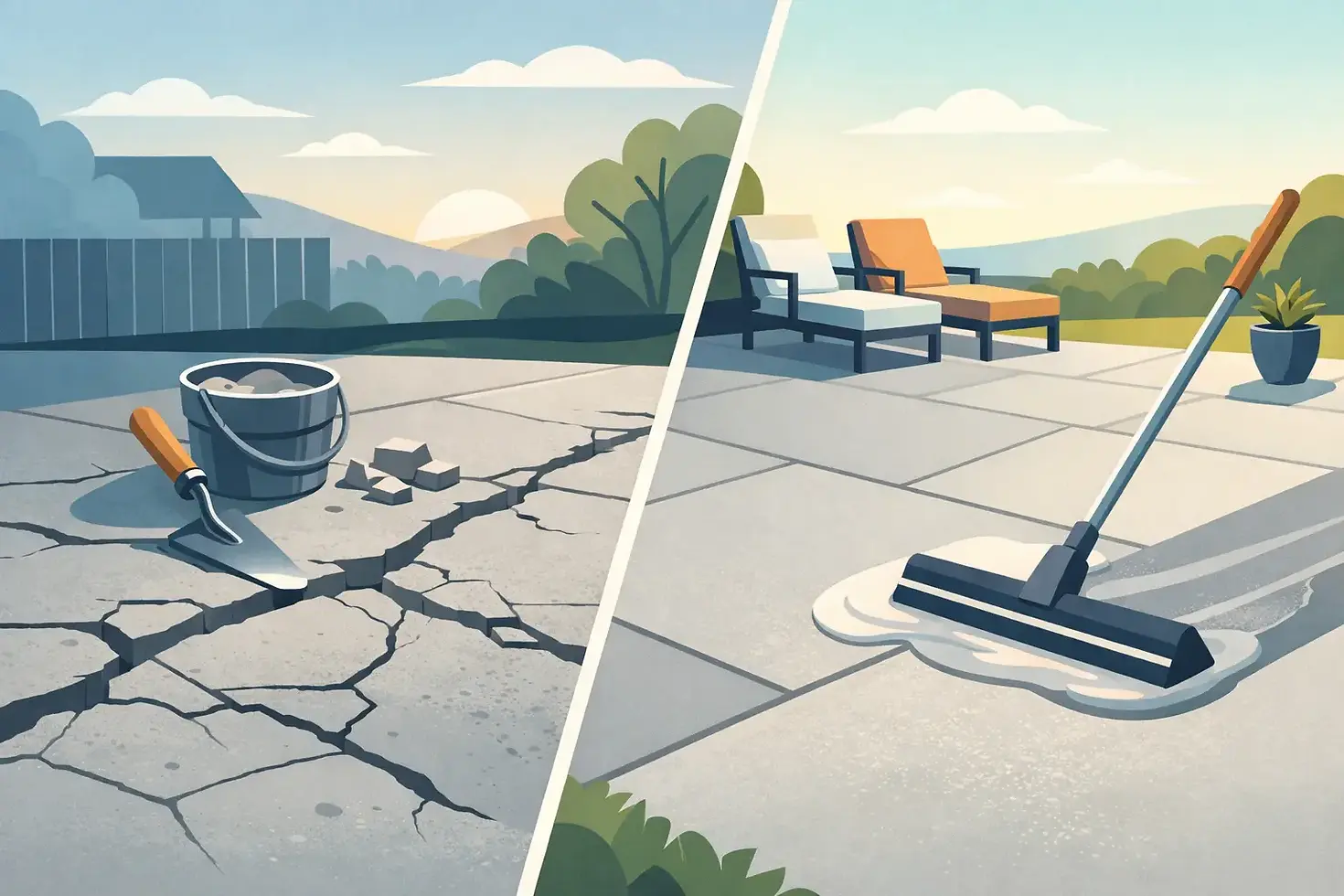
Resurfacing is often a strong option when cracks are narrow, the concrete remains level, and there is no evidence of ongoing movement. Before applying an overlay, a qualified contractor cleans and prepares the concrete, repairs cracks and damaged areas, and evaluates drainage and joint placement. The resurfacing material is then installed over the prepared slab to create a renewed, uniform finish.
A quality overlay does more than cover discoloration. It can refresh worn concrete while giving homeowners more control over the appearance of their outdoor space. Depending on the project, a resurfaced patio may receive a smooth modern finish, a decorative texture, a stamped pattern, or a custom color treatment that better fits the home.
The best candidates for resurfacing usually have a slab that is structurally intact but cosmetically worn. The surface may have light cracking, old paint, stains, minor scaling, or an outdated finish. If the concrete has a solid base and proper drainage, resurfacing can provide an impressive upgrade without starting from scratch.
When patio resurfacing is not the right fix
Not every cracked patio should receive an overlay. Wide cracks, uneven sections, sinking corners, or cracks that continue to separate are signs that the problem may be below the surface. A decorative finish cannot correct a slab that is actively moving.
In North Texas, expansive clay soils can create real challenges for exterior concrete. Soil expands after heavy rain and contracts during dry periods. That movement can cause slabs to settle, lift, or crack in ways that a surface repair alone cannot solve. Tree roots, poor water drainage, and an improperly prepared base can create similar concerns.
Replacement or more extensive repair may be the better investment when a patio has major elevation changes, deep deterioration, extensive crumbling, or drainage issues that direct water toward the home. The same is true if cracks are wide enough to show significant separation or if one side of the crack sits noticeably higher than the other.
An honest evaluation matters here. Resurfacing is a great value when it fits the condition of the slab. It is not a shortcut we recommend when the underlying concrete is no longer dependable. Homeowners deserve clear answers about whether a repair will last, what it will cost, and what results to expect before work begins.
What a durable resurfacing project involves
The quality of a resurfaced patio depends heavily on preparation. The visible finish may be the exciting part, but the work beneath it determines how well it performs through Texas heat, rain, foot traffic, patio furniture, and regular outdoor use.
First, the patio is inspected for cracks, weak concrete, moisture concerns, and drainage problems. Loose material, failed coatings, dirt, and contaminants must be removed so the new material can bond correctly. This often involves mechanical surface preparation rather than simply pressure washing the slab.
Next, cracks and minor surface defects are repaired with materials suited to the condition of the concrete. Control joints are respected and incorporated into the new finish where needed. These joints are designed to give concrete a planned place to move and crack, which helps reduce random cracking across the surface.
After the base is properly prepared, the resurfacing system is applied in layers according to the selected finish. A decorative concrete overlay may be troweled smooth, textured for traction, or stamped to create the appearance of natural stone, slate, tile, or other high-end materials. Color can be integrated into the overlay, added through stains, or enhanced with a protective sealer.
The final step is curing and sealing. A premium sealer helps protect the patio from moisture, stains, UV exposure, and everyday wear. For pool decks and other wet areas, the finish should also be selected with slip resistance and bare-foot comfort in mind.
Resurfacing options for an outdated patio
A resurfaced patio does not need to look like plain gray concrete. For homeowners improving an outdoor living area, the finish can become a central part of the design.
A smooth overlay works well for clean, contemporary patios and can make an older surface feel more refined. Broom or knockdown textures add traction while maintaining a simple appearance. Stamped overlays are a popular option for homeowners who want a more decorative look without installing individual pavers or natural stone.
Color choices matter in the Dallas-Fort Worth climate. Lighter tones can help reduce heat absorption in open, sunny patios, while richer earth tones can complement brick, stone, and traditional exterior finishes. The right color and texture should fit both the home and the way the patio will be used.
For example, a patio beside a pool may benefit from a cooler-toned textured overlay designed for wet conditions. A covered outdoor kitchen may call for a decorative stamped finish that brings visual definition to the entertaining area. A simple backyard slab may only need crack repair, a fresh overlay, and a neutral color to feel like a completely new space.
How long does a resurfaced patio last?
A properly resurfaced patio can provide years of reliable service, but longevity depends on the slab condition, the preparation process, material quality, drainage, and maintenance. A premium resurfacing system installed over sound concrete will perform far better than a thin coating applied over a dirty, cracked, or unstable surface.
Homeowners can protect their investment by keeping the patio clean, addressing drainage issues early, and resealing the surface when recommended. Avoid dragging sharp metal furniture across decorative finishes, and use care with harsh chemicals, especially around outdoor kitchens or pool areas.
It is also reasonable to expect some normal concrete movement over time. Resurfacing reduces the appearance of existing surface damage and creates a more attractive finish, but no contractor can promise that concrete will never crack again. The goal is to repair what can be repaired, use the right system for the site, and build a surface that holds up well under real conditions.
Choosing the right contractor for cracked patio resurfacing
The question is not only, “Can cracked patios be resurfaced?” It is also, “Will this contractor tell me if resurfacing is truly the right option?” A dependable concrete contractor should inspect the slab before recommending a finish, explain the condition of the existing concrete in plain language, and provide an honest quote that matches the scope of work.
Look for a team with experience in decorative concrete, not just basic flatwork. Decorative overlays require careful surface preparation, material knowledge, proper timing, and skilled finishing. Details such as consistent color, clean edges, proper joint treatment, and a well-applied sealer are what separate a patio that looks good for a season from one that adds lasting value to the home.
At J. Rodriguez Concrete Contractors, the focus is on helping homeowners choose a solution that fits the slab, the budget, and the vision for the space. Whether the best answer is crack repair and resurfacing or a more complete patio replacement, the work should be clearly planned, professionally installed, and built to last.
A cracked patio does not have to stay an eyesore or become an automatic replacement project. Start with a thorough assessment, solve the cause of the damage where possible, and choose a finish that makes the outdoor space more enjoyable every time you step outside.


Comments