

Does Concrete Overlay Work for Old Concrete?
If your patio or pool deck is looking worn but the idea of tearing everything out feels expensive and disruptive, the question usually comes down to this: does concrete overlay work? In many cases, yes, it does - and it can work very well. But the real answer depends on the condition of the slab underneath, the surface preparation, and whether the system is installed by a contractor who knows how to build a finish that lasts in Texas weather.
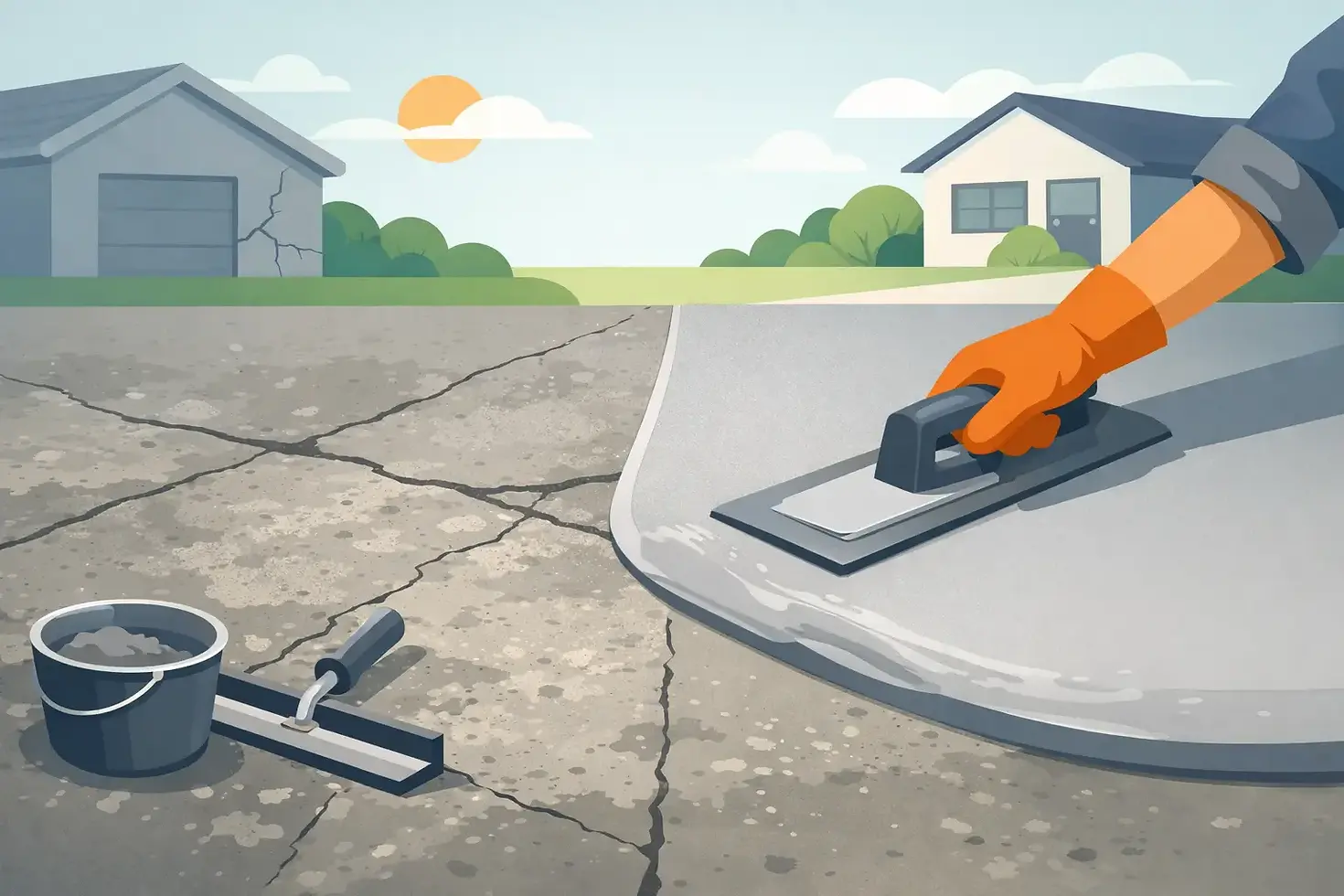
A concrete overlay is not paint and it is not a shortcut. It is a resurfacing system designed to go over existing concrete and create a fresh, durable finish. For homeowners in Dallas-Fort Worth, that can be a smart way to upgrade a dated patio, improve a slick pool deck, or restore curb appeal without paying for full replacement when replacement is not actually needed.
Does concrete overlay work in real-world conditions?
It works when the existing concrete is structurally sound. That is the first filter, and it matters more than the finish color or pattern.
If the slab has minor surface wear, cosmetic discoloration, light pitting, or hairline cracking, an overlay can be an excellent solution. It gives you a clean new surface and opens up decorative options like stamped textures, modern finishes, and custom color. For many homeowners, that means getting the high-end look they want without the cost and mess of demolition.
If the slab is moving, sinking, heaving, or badly cracked through the full depth, an overlay is not the right fix. No quality contractor should tell you otherwise. An overlay can improve the top surface, but it cannot solve a failing foundation underneath. When the base concrete has structural problems, replacement is usually the better investment.
That is why the question is not just does concrete overlay work. The better question is whether your existing concrete is a good candidate.
What makes a concrete overlay last?
The biggest factor is preparation. This is where good projects separate themselves from the ones that start peeling, flaking, or showing problems too soon.
The existing slab has to be cleaned properly, repaired where needed, and mechanically prepared so the overlay can bond correctly. Any weak material, contamination, or loose surface has to be dealt with before resurfacing begins. If someone skips that step or rushes it, the finished product may look good for a short time and then fail early.
Material choice matters too. Not all overlay products are the same. Some are designed for decorative texture, some for heavy traffic, and some for specific exterior conditions. In a market like DFW, heat, sun exposure, rain, and freeze-thaw swings can all affect long-term performance. Using commercial-grade materials and matching the system to the space is part of doing the job right.
Installation skill is the third piece. Decorative overlays, especially stamped overlays and pool deck finishes, take more than basic concrete knowledge. Timing, mix consistency, application thickness, texture work, and sealing all affect the final result. A premium finish only looks premium if it is installed with precision.
Where overlays work best around the home
Concrete overlays are especially popular on patios, pool decks, walkways, and some driveways. These are the areas where homeowners want both performance and appearance.
On patios, an overlay can completely change the feel of the space. A plain slab can be resurfaced to look more refined and intentional, which matters if you use your backyard for entertaining or want the area to match an upgraded outdoor living design.
On pool decks, overlays are often a practical improvement as much as a visual one. The right finish can refresh worn concrete, improve texture underfoot, and give the whole area a cleaner, more upscale appearance. Since pool areas are highly visible and constantly exposed to water and sun, homeowners usually want something that looks sharp and holds up.
Driveways are a little more case-specific. Yes, overlays can work there, but driveways take more abuse from vehicle traffic, turning tires, heat, and oil exposure. A driveway overlay needs the right product and proper installation, and the slab underneath has to be in solid condition. When those factors line up, resurfacing can be a cost-effective alternative to replacement. When they do not, replacement is the safer path.
When concrete overlay is not the right solution
A trustworthy contractor should be willing to tell you no.
If the concrete has major settling, widespread structural cracks, drainage issues, or repeated moisture problems, resurfacing may only cover the symptoms for a while. That is not a built-to-last solution, and homeowners usually regret paying for cosmetic work when a deeper issue was never addressed.
There is also a difference between an old slab and a failing slab. Age alone does not rule out an overlay. We have seen older concrete that is still structurally sound and a great candidate for resurfacing. On the other hand, newer concrete can still be a poor candidate if it was poured badly, has movement, or developed major defects.
The goal should not be to force an overlay onto every project. The goal is to choose the option that gives you long-term value.
Does concrete overlay work better than replacement?
Sometimes yes, sometimes no. It depends on what you are trying to solve.
If your main issue is appearance, an overlay is often the better move. It is typically faster, less invasive, and more affordable than tearing out and repouring a slab. It also gives you more decorative flexibility, especially if you want a stamped or upgraded finish.
If your issue is structural performance, replacement is usually the right choice. A new surface on top of bad concrete does not create a sound slab. It only delays the bigger repair.
For many homeowners, the value of resurfacing is that it avoids unnecessary work. You keep the existing base if it is still doing its job, and you invest in the finish and function you actually care about. That is a smart use of budget when the slab qualifies.
Common reasons overlays fail
Most overlay failures are not because overlays do not work. They fail because they were installed on the wrong slab or installed the wrong way.
Poor surface prep is one of the biggest problems. So is applying a product that is not suited for the environment or traffic level. In some cases, contractors bid low by skipping repair steps, using weaker materials, or moving too fast through curing and sealing. The surface may look good at handoff, but the weakness is already built in.
Moisture issues can also cause trouble. If water is moving through the slab or collecting where it should not, that can affect bond and durability. Drainage should always be part of the conversation, especially around pool decks, patios, and outdoor living spaces.
This is why homeowners should be cautious about choosing based on price alone. With resurfacing, the quality you do not see during prep often matters more than the finish you do see at the end.
What Dallas-Fort Worth homeowners should keep in mind
North Texas weather is demanding on exterior concrete. Long heat cycles, strong sun, heavy rain, and seasonal cold snaps all put stress on outdoor surfaces. That does not mean overlays are a bad fit here. It means installation standards matter.
A properly installed overlay can hold up well in DFW, especially on residential patios and pool decks where the existing slab is stable and the finish is maintained correctly. The key is working with a contractor who understands local conditions, uses premium materials, and gives you a realistic recommendation instead of a one-size-fits-all sales pitch.
That is also where design matters. Homeowners in this market are not just trying to patch concrete. They want outdoor spaces that look finished, fit the home, and add value. An overlay can absolutely do that when the project is planned the right way.
So, does concrete overlay work?
Yes - when the slab is sound, the prep is done correctly, and the installation is handled with real skill. No - when someone tries to use it as a cover-up for structural problems or cuts corners on the process.
The good news is that many worn patios, pool decks, and walkways are strong candidates for resurfacing. If your concrete is basically solid but looks tired, dated, or rough, an overlay can deliver a dramatic upgrade without the cost and disruption of full replacement.
At J. Rodriguez Concrete Contractors, that is the standard we believe in: honest quotes, clear recommendations, and work that is built to last. If your slab is a good candidate, resurfacing can be one of the smartest ways to improve your outdoor space. If it is not, the right answer is to tell you that upfront.
The best next step is simple: have the concrete evaluated by someone who cares more about the right solution than the easy sale.


Comments