


Which Pool Coating Stays Cool in Texas Heat?
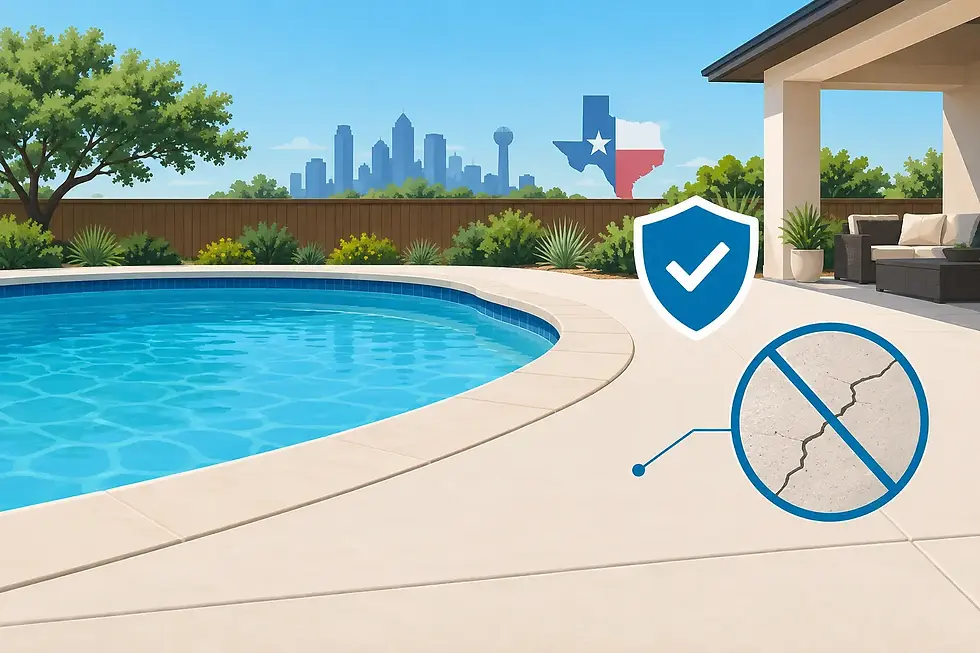
A pool deck can look great at 10 a.m. and become painful to cross barefoot by midafternoon. For Dallas-Fort Worth homeowners asking which pool coating stays cool, the most reliable answer is a light-colored, textured acrylic cool-deck coating or a properly installed cementitious overlay designed for pool areas. The right choice depends on your existing concrete, the amount of direct sun, the color you want, and how much durability you expect from the finished surface.
A coating cannot make a deck feel cold in a Texas summer. What it can do is reflect more solar heat, reduce the heat held at the surface, and create a more comfortable texture under bare feet. Those differences matter when your family is moving between the pool, patio, and outdoor kitchen all season long.
Which Pool Coating Stays Coolest?
In most residential pool settings, a light-colored acrylic spray texture coating is the best option for keeping a concrete deck comfortable underfoot. Often called a cool-deck coating, this system is applied in a lightly textured finish that reflects sunlight better than plain gray concrete, dark stains, or dense glossy coatings.
A light beige, sand, cream, pale gray, or soft tan color generally performs better than charcoal, dark brown, deep blue, or black. The coating formula matters, but color has a major effect on surface temperature. A darker deck absorbs more solar energy, so even a premium coating can become uncomfortably hot if the selected color is too dark.
Cementitious overlays can also be an excellent choice. These polymer-modified concrete coatings can be finished with a knockdown texture, a broom texture, or a decorative pattern. When installed in a light color and sealed with an appropriate low-sheen sealer, they offer a durable, upscale alternative for homeowners who want more design flexibility than a basic spray texture provides.
The best-performing finish is usually not a single product name. It is a complete system: proper deck preparation, a coating rated for exterior pool use, a light-reflective color, a slip-resistant texture, and installation by a crew that understands how concrete behaves in North Texas heat.
Why Some Pool Deck Coatings Feel Hotter
Concrete absorbs and stores heat. Dense, dark, smooth surfaces tend to hold more of it, which is why a dark stamped patio or a dark epoxy finish can feel much hotter than a light textured pool deck. The sun is not the only factor, either. Heat reflected off pool water, masonry walls, glass doors, and nearby hardscape can raise the deck temperature in exposed areas.
Texture helps because it changes how your foot contacts the surface and can reduce the feeling of stored heat. That does not mean the roughest texture is best. An overly aggressive finish can be uncomfortable, difficult to clean, and hard on bare feet. A professionally applied knockdown or spray texture provides traction and comfort without making the deck feel abrasive.
Sealer selection matters as well. A thick, glossy coating may look attractive at first, but some high-build finishes retain heat and can become slick when wet. For pool areas, a breathable, exterior-rated sealer with a natural or low-sheen appearance is often the better fit. It protects the finish while preserving the texture homeowners need around water.
How Popular Pool Coating Options Compare
Acrylic cool-deck coatings
Acrylic cool-deck coatings are a strong choice for existing concrete that is structurally sound but weathered, stained, or too hot to enjoy. They are designed to create a textured walking surface and can be applied in lighter colors that reflect more sunlight. They are also practical for resurfacing a pool deck without removing and replacing the slab.
The trade-off is that coatings are only as durable as the preparation beneath them. Loose material, failed previous coatings, oil contamination, or active concrete movement must be addressed before installation. A quick cover-up may look good briefly, but it will not deliver built-to-last results.
Cementitious overlays
For homeowners who want a more substantial decorative upgrade, a cementitious overlay is often the premium option. It can refresh aging concrete, correct minor surface wear, and create a custom texture or pattern that fits the home and pool design. Light-colored overlays can stay noticeably more comfortable than standard concrete in direct sun.
An overlay is not the right solution for every slab. Large cracks, severe settling, poor drainage, or extensive concrete failure may require repair work before resurfacing. An honest evaluation should come before choosing a finish, especially around a pool where water can expose weaknesses quickly.
Epoxy and polyaspartic coatings
Epoxy and polyaspartic systems are durable and popular for garages, but they are usually not the first recommendation for a sun-exposed pool deck. Some formulas can yellow or lose their appearance under intense UV exposure, and smooth finishes can be slippery near water unless a broadcast texture is added. Darker colors also get hot fast.
There are exterior-rated systems that may work in select covered patio areas or specialized applications. Still, homeowners focused on cool barefoot comfort will usually be better served by a textured acrylic or cementitious pool-deck system.
Bare concrete, stain, and stamped finishes
Bare concrete is simple, but it can be hot, slick when wet, and difficult to refresh once it becomes stained or worn. Acid stains and darker integral colors can create a beautiful look, yet they are not the best choice when staying cool is the priority.
Stamped concrete offers visual appeal and can mimic stone, slate, or travertine. However, stamp patterns are often sealed, and the final temperature depends heavily on color and sealer choice. If you want the look of decorative concrete near the pool, choose a lighter palette and ask for a finish designed for traction rather than high gloss.
The Details That Make a Cool Deck Perform Better
The coating itself is only part of the project. Drainage and shade can have just as much impact on how usable your pool area feels. Standing water can damage finishes over time, while full afternoon exposure can make even a light deck hot during peak summer hours.
A thoughtful design may include a light base color with subtle accent colors, a comfortable knockdown texture, and shade from a pergola, umbrella, or mature landscaping. These choices improve the deck without turning the space into a high-maintenance project. They also help protect the investment by reducing harsh sun exposure across the surface.
Homeowners should also be realistic about cleaning and care. Pool chemicals, sunscreen, leaf tannins, and hard-water deposits can affect the appearance of any deck coating. Regular rinsing, prompt cleanup of spills, and periodic resealing when recommended will help preserve color and texture. Avoid harsh acids and pressure washing that is too aggressive, since both can damage a coating or strip its protective sealer.
Choosing the Right Color for a Dallas-Fort Worth Pool Deck
If coolness is the goal, stay in the lighter end of the color range. Cream, ivory, light taupe, pale tan, and light gray generally balance heat reflection with a clean, high-end appearance. Pure white can be bright around pool water and may show dirt more easily, so many homeowners prefer a warm off-white or light sand tone.
A contractor should provide realistic samples and explain that a small sample can look different across a large deck in full sun. The surrounding brick, coping, pool tile, and outdoor furniture all influence the final look. A custom color plan should complement the home while keeping the surface practical for bare feet.
At J. Rodriguez Concrete Contractors, the goal is not to push a one-size-fits-all coating. It is to help homeowners choose a durable decorative surface that fits the condition of their concrete, their design preferences, and the way they actually use their backyard.
When Replacement May Be Better Than Coating
A pool coating is an excellent upgrade for sound concrete, but it cannot fix every problem. If the deck has major settling, wide moving cracks, serious spalling, or drainage that directs water toward the home or pool, repairs may need to come first. In some cases, replacing a failed section is the more dependable long-term decision.
A quality estimate should clearly separate surface preparation, crack repair, coating work, and any recommended concrete corrections. That gives you a clear picture of the investment and prevents surprises once the project begins. The right contractor will explain the limits of a coating instead of promising that it can solve structural problems it cannot.
For a pool deck that is comfortable, attractive, and ready for Texas summers, start with a light color, a barefoot-friendly texture, and an installation plan built around the condition of your concrete. That combination will serve your family far better than choosing a finish based on color alone.


Comments