

Stamped Concrete vs Pavers: Which Wins?
- Jorge Rodriguez
- Jun 30
- 6 min read
If you're planning a new patio, pool deck, or driveway, the stamped concrete vs pavers question usually comes up fast - and for good reason. Both can look upscale, both can improve curb appeal, and both can hold up well when installed correctly. The difference is in how they perform over time, how much maintenance you're comfortable with, and what kind of finished look you want around your home.
For Dallas-Fort Worth homeowners, that choice also has to work in real conditions. Heat, shifting soil, heavy sun exposure, and the occasional freeze all affect outdoor surfaces. A material that looks great on day one is only part of the story. What matters is how it ages, how easy it is to maintain, and whether it still feels like a smart investment a few years down the line.
Stamped concrete vs pavers at a glance
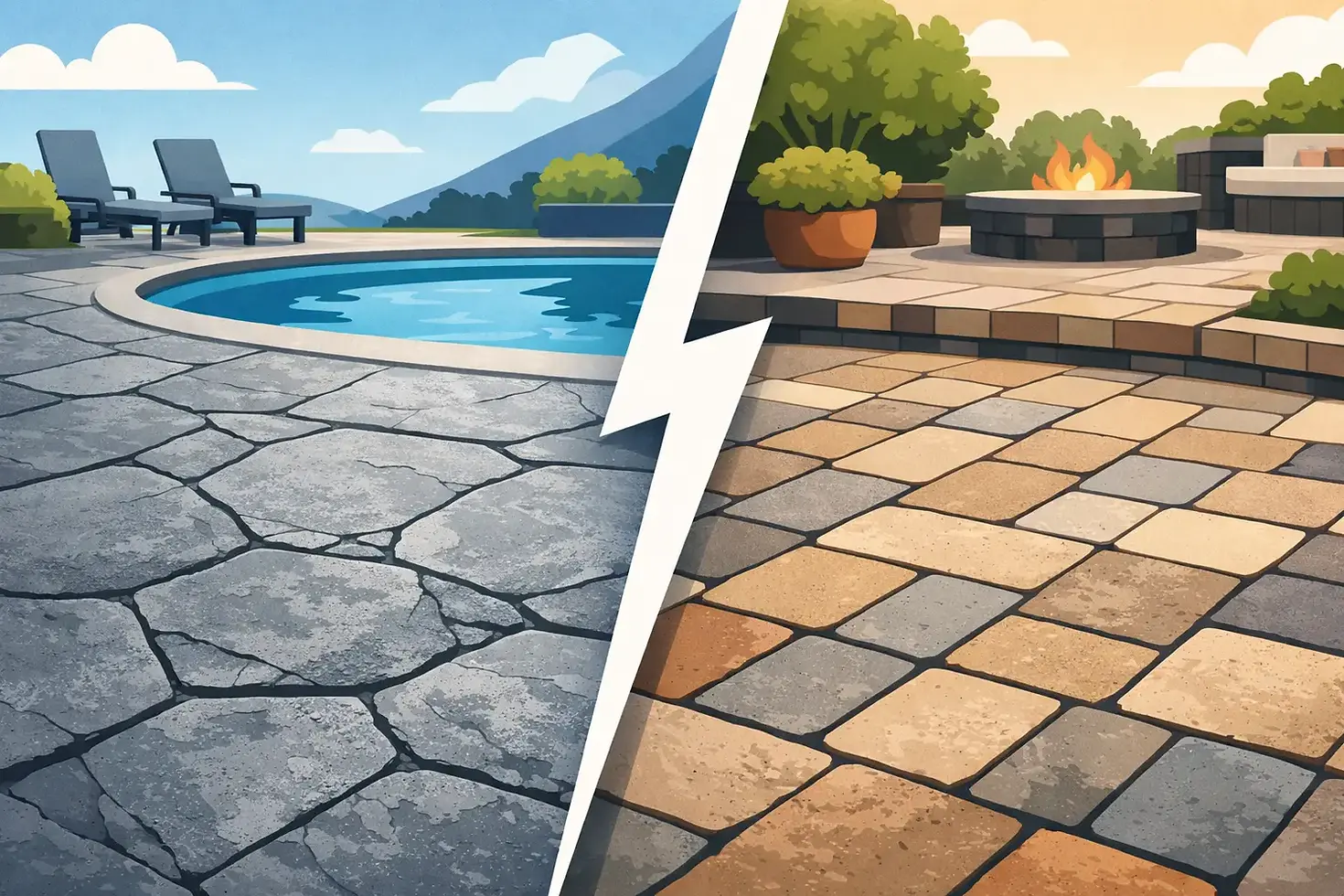
Stamped concrete is a poured concrete slab that is textured and colored to resemble stone, brick, tile, or wood. It gives you a continuous surface with a custom decorative finish. Pavers are individual units, usually concrete or brick, installed piece by piece over a prepared base.
At first glance, they can achieve a similar style. But they are built very differently, and that affects everything from price to repairs. Stamped concrete usually gives you a cleaner, more unified appearance and often a lower upfront cost for larger areas. Pavers offer a segmented surface that can be easier to repair and may handle movement differently over time.
The better option depends on the space, your priorities, and how much ongoing maintenance you want to take on.
Cost often decides the conversation first
For many homeowners, budget is the first filter. In most cases, stamped concrete costs less upfront than pavers, especially on larger patios, walkways, and pool decks. Because it is poured and finished as one system, installation tends to be more efficient than placing and leveling hundreds of individual pieces.
Pavers usually come with a higher material and labor cost. The installation process is more detailed, and the prep work has to be precise. That added cost can make sense if you specifically want the paver look or you value piece-by-piece repairability.
Still, upfront cost is only one part of the decision. A lower initial price does not automatically mean lower lifetime value, and a higher initial price does not always mean better performance. What matters is how the surface is installed and whether it fits the way you use your outdoor space.
Appearance and design flexibility
This is where personal taste matters most. Stamped concrete is popular because it can create a high-end custom look without the broken visual lines you get from separate units. If you want a patio that feels clean, elegant, and tailored to the home, stamped concrete gives you a lot of design control. Pattern, texture, border work, and color can all be customized.
That is especially useful for homes with outdoor living areas, pool surrounds, or entertaining spaces where a more refined finish makes a difference. Decorative concrete can be designed to complement brick exteriors, modern facades, or traditional backyard layouts without making the surface look busy.
Pavers offer flexibility too, but in a different way. They create visual texture through joints, pattern layouts, and color blends. Some homeowners prefer that modular look, especially for driveways or spaces where a classic stone appearance is the goal.
If you want a smooth visual flow and a more custom decorative finish, stamped concrete usually has the edge. If you like the look of individual stones and visible pattern repetition, pavers may be the better fit.
Durability in North Texas conditions
In the DFW area, ground movement is a real consideration. Expansive clay soils can shift with moisture changes, and that movement affects all hardscape surfaces. Neither stamped concrete nor pavers is immune to poor installation. The real issue is how the system is built underneath and how well it is prepared for local conditions.
A properly installed stamped concrete surface can be extremely durable. With the right concrete mix, reinforcement, joint placement, and sealing plan, it holds up well for patios, walkways, and pool decks. It also performs well under regular foot traffic and everyday backyard use.
Pavers can handle ground movement differently because the system includes joints between units. In some cases, that allows for more localized adjustment rather than visible slab cracking. But pavers are not maintenance-free. They can shift, settle unevenly, or develop weed growth in joints if the base is not built correctly or if maintenance is ignored.
For driveways, the conversation gets more specific. Both materials can work, but load requirements, thickness, subgrade prep, and drainage become critical. A premium installation matters far more than a simple material comparison.
Maintenance and repairs
This is one of the biggest trade-offs in stamped concrete vs pavers.
Stamped concrete needs periodic cleaning and resealing to protect color and surface performance. That maintenance is straightforward, but it does need to be done on schedule. If the surface is neglected for too long, fading, wear, or moisture issues can become more noticeable.
If stamped concrete cracks, repairs can be more complicated from a cosmetic standpoint. Concrete can be repaired structurally, but matching color and texture exactly is not always easy. That does not mean stamped concrete is a bad choice. It simply means the quality of the original installation matters a great deal.
Pavers are often praised for easy repair because individual units can be lifted and replaced. That is a real advantage when damage is isolated. At the same time, paver systems require joint sand maintenance, weed control, and occasional leveling if areas begin to shift.
So the question is not which one has maintenance and which one does not. Both require attention. The better question is which kind of maintenance you would rather deal with.
Best uses for stamped concrete
Stamped concrete is often the stronger choice when homeowners want a decorative upgrade that feels polished, cohesive, and efficient. It works especially well for patios, pool decks, walkways, and outdoor entertaining spaces where appearance carries as much weight as function.
It is also a strong option when you want the look of natural materials without paying natural stone pricing. When installed by skilled finishers using quality materials, it can deliver a premium result that feels custom rather than cookie-cutter.
For homeowners updating an older backyard, stamped overlays and resurfacing options can also create a fresh look without a full tear-out in some situations. That opens the door to a major visual improvement with less disruption.
When pavers may be the better fit
Pavers make sense when you prefer a modular aesthetic, want piece-by-piece replacement options, or are building a space where the visual style calls for that segmented stone look. They can also appeal to homeowners who like the idea of a system that can be adjusted over time if isolated settlement occurs.
That said, pavers are not automatically the premium choice just because they cost more. If the installation is rushed or the base is poorly prepared, problems can show up sooner than expected. A higher-end material still depends on higher-end workmanship.
What homeowners usually regret
Most regrets do not come from choosing stamped concrete or choosing pavers. They come from choosing based on price alone, hiring the wrong installer, or underestimating maintenance.
A rushed stamped concrete job can lead to weak finishing, poor color consistency, and early surface wear. A rushed paver installation can lead to uneven settling, loose edges, and drainage issues. In both cases, the material gets blamed when the real problem was installation quality.
That is why contractor selection matters just as much as material selection. Homeowners want honest quotes, clear scheduling, and work that is built to last. Those basics make a huge difference in how satisfied you will be long after the project is done.
How to choose between stamped concrete vs pavers
If you want a refined custom look, a more unified surface, and strong value for the investment, stamped concrete is often the better choice. If you prefer a piece-by-piece system and like the look of distinct units with visible joints, pavers may fit better.
For many DFW homes, stamped concrete stands out because it balances appearance, durability, and cost in a way that makes sense for patios and pool decks. It can elevate the entire backyard without adding unnecessary complexity. That is a big reason homeowners turn to specialists like J. Rodriguez Concrete Contractors when they want decorative concrete done right the first time.
The best surface is the one that fits your home, your maintenance expectations, and the way you plan to use the space. A good contractor should help you weigh those factors clearly, not push you into a one-size-fits-all answer. When the plan is thoughtful and the workmanship is solid, your outdoor space feels better every time you step outside.

Comments