

Exposed Aggregate vs Stamped Concrete Compared
A decorative concrete surface has to do more than look good on installation day. It has to handle Texas heat, heavy foot traffic, pool water, furniture, and the occasional storm without becoming a maintenance headache. When homeowners compare exposed aggregate vs stamped concrete, the better choice usually comes down to where the concrete will go, how the area will be used, and the look they want to live with for years.
Both finishes can turn a plain patio, driveway, walkway, or pool deck into a more polished outdoor feature. They are not interchangeable, though. Exposed aggregate delivers a natural, textured finish with dependable traction. Stamped concrete offers more design flexibility and can recreate the character of stone, brick, tile, or wood. Understanding the trade-offs before work begins leads to a surface that feels right for your home and your budget.
Exposed Aggregate vs Stamped Concrete at a Glance
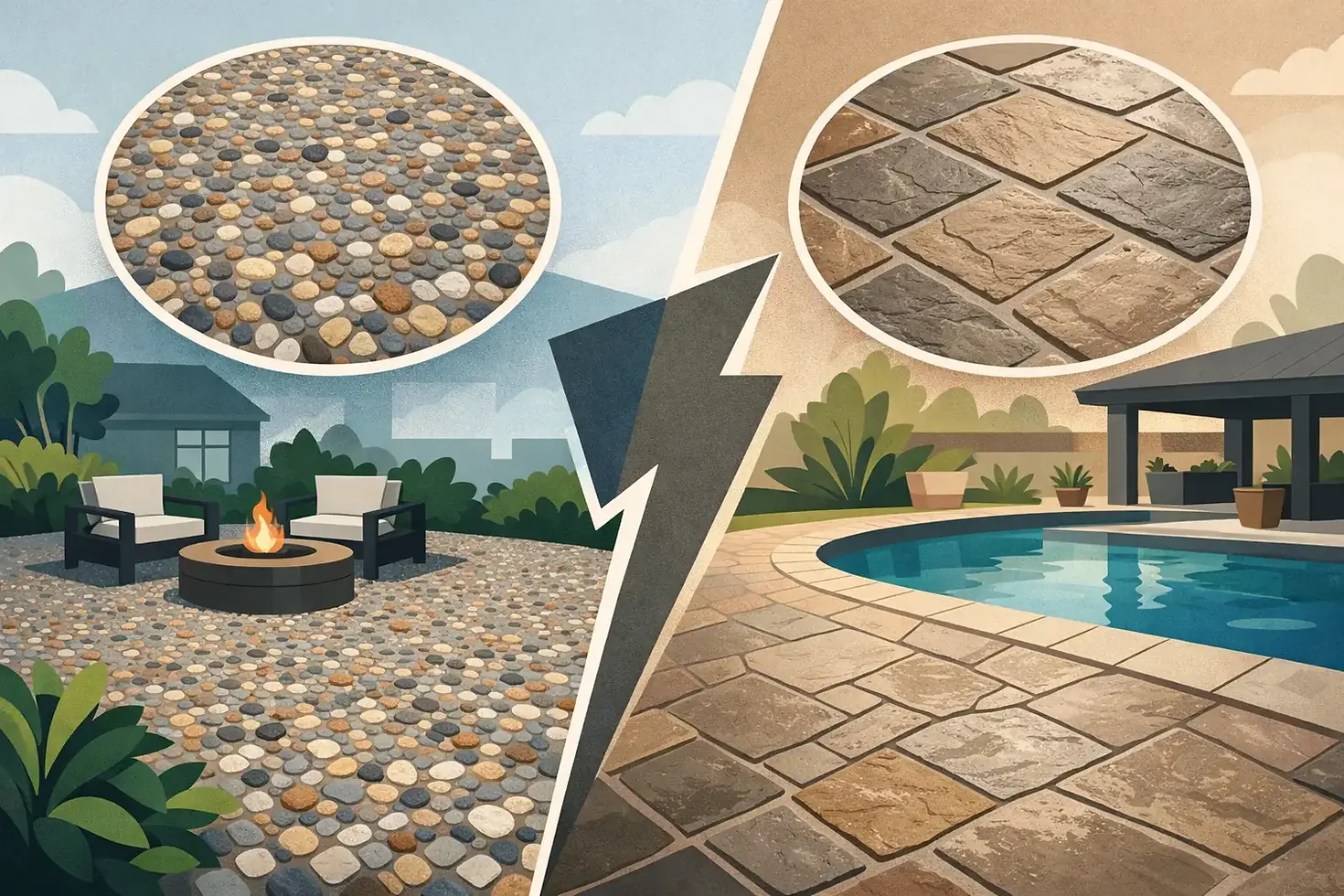
Exposed aggregate is concrete finished to reveal the decorative stone within the mix. After the concrete is placed, the surface paste is carefully removed at the right point in the curing process, exposing pea gravel, crushed stone, or other selected aggregate. The result is a textured surface with natural color variation and a distinctive, high-end appearance.
Stamped concrete starts with freshly placed concrete that is colored and impressed with specialized mats. Those mats create patterns that resemble materials such as flagstone, slate, travertine, brick, cobblestone, or wood planks. Contractors can also use integral color, release color, borders, and saw-cut details to create a more custom design.
The main difference is simple: exposed aggregate gets its character from real stone in the concrete, while stamped concrete gets its character from a patterned and colored surface treatment. Both require skilled installation. A decorative finish is only as good as the preparation, concrete mix, timing, joint layout, and finishing work behind it.
Which Look Fits Your Home?
Stamped concrete is often the stronger choice for homeowners who have a specific design vision. A stamped patio can complement a stone veneer, brick exterior, traditional landscape design, or contemporary outdoor kitchen. It gives you more control over pattern, color, and layout, which makes it especially useful when the goal is to make a new slab look less like conventional concrete.
Exposed aggregate has a more organic appearance. It works well with homes that have natural stone, lush landscaping, neutral exterior colors, or a relaxed poolside setting. Since the aggregate is real, no two sections look exactly alike. That variation is part of its appeal, but it also means the final appearance depends heavily on aggregate selection and consistent finishing.
For a clean, understated outdoor surface, exposed aggregate is hard to beat. For a more decorative statement with the visual effect of pavers or stone, stamped concrete usually provides more options.
Traction Matters Around Pools and Walkways
In North Texas, a pool deck needs to be attractive without becoming slick when wet. Exposed aggregate has a built-in advantage here. Its lightly raised stone texture provides reliable grip under bare feet and wet shoes. That makes it a popular choice for pool decks, front walkways, and areas where children, guests, and pets will be moving around frequently.
Stamped concrete can also be finished with traction in mind, but the texture depends on the selected pattern and sealer. Some stamped finishes are more aggressive than others, and a high-gloss sealer can reduce slip resistance when water is present. A qualified contractor can recommend a suitable sealer and additives for poolside applications, but homeowners should discuss traction early rather than treating it as an afterthought.
Texture has a comfort trade-off. A very exposed aggregate finish can feel rougher on bare feet than a lightly textured stamped surface. For pool decks, the right stone size and exposure level make a real difference. The goal is enough texture for safety without creating a surface that feels harsh to walk on.
Durability Depends on Installation, Not Just Finish
Neither exposed aggregate nor stamped concrete automatically lasts longer. Both can provide built-to-last results when installed over a properly prepared base with the right concrete mix, reinforcement where appropriate, drainage planning, and control joints.
Dallas-Fort Worth soils can move, and summer temperatures can put concrete through significant expansion and contraction. Decorative concrete needs joints placed intentionally to help manage cracking. Those joints will still be part of the finished surface because concrete can crack, but thoughtful layout makes them less noticeable and helps protect the overall slab.
With exposed aggregate, poor timing during washing can leave the surface uneven or weaken the top layer. With stamped concrete, rushed stamping, inconsistent color application, or poorly placed joints can make the pattern look artificial or disjointed. These are craftsmanship issues, not unavoidable features of the materials.
For either option, avoid judging a contractor solely by the lowest price. Decorative concrete is detail-driven work. Honest quotes should account for site preparation, drainage needs, material quality, reinforcement, finishing, sealing, and cleanup rather than leaving critical steps vague.
Maintenance: What Homeowners Should Expect
Both finishes benefit from periodic cleaning and resealing, especially in outdoor spaces exposed to sun, rain, leaves, barbecue grease, and pool chemicals. Regular sweeping and gentle washing help keep dirt from settling into texture and reduce staining over time.
Stamped concrete generally needs more attention to its color and sealer. Over several years, sun exposure and foot traffic can dull the finish, particularly on areas that receive direct afternoon sunlight. Resealing restores color depth and provides protection, but the surface should be properly cleaned and prepared first. If color fades unevenly or the sealer wears poorly, repairs may require more careful blending.
Exposed aggregate is more forgiving visually because the stone is part of the slab, not a color layer on top of it. It can still need resealing to protect the surface and enrich its appearance, but minor wear tends to be less obvious. Its textured profile can collect more debris than smooth concrete, particularly near landscaping, so routine cleaning is useful.
If low-maintenance performance is your top priority, exposed aggregate often has the edge. If you prefer a more customized pattern and are comfortable with periodic resealing, stamped concrete remains an excellent long-term option.
Cost Considerations for Decorative Concrete
Pricing for exposed aggregate vs stamped concrete varies by project size, access, demolition needs, slab condition, drainage corrections, design complexity, and material selection. A straightforward patio is a different job from a multi-level pool deck with borders, steps, curves, and a custom color plan.
Stamped concrete can cost more when the design includes multiple colors, detailed borders, premium patterns, or intricate layout work. Exposed aggregate may require specialty aggregate and careful surface-retarder application, but it usually has fewer decorative variables. Neither should be treated as a commodity finish.
The best value is not simply the lower installed price. Consider how the surface supports your outdoor space, how well it fits the home, what maintenance it will need, and whether the installer has a clear plan for preparation and finishing. A patio that looks dated or performs poorly after a few seasons is not a bargain.
When Exposed Aggregate Is the Better Choice
Exposed aggregate is often the right fit for homeowners who want a natural look, dependable wet-weather traction, and a finish that does not rely on simulated patterns. It is especially well suited to pool decks, walkways, entry areas, and patios where a subtle, premium texture is more important than decorative color variation.
Choose aggregate thoughtfully. Stone color, size, and exposure level should complement the home and feel comfortable underfoot. A sample or clear visual reference helps set expectations before placement day.
When Stamped Concrete Is the Better Choice
Stamped concrete is the better choice when visual customization leads the project. It can create a coordinated outdoor living space around a covered patio, fireplace, kitchen, or landscaping plan without the higher material cost and joint maintenance associated with many individual pavers.
It is also a strong option for homeowners who want to resurface or update an existing space through a stamped overlay, provided the underlying concrete is sound. The design should match the home rather than compete with it. A restrained pattern and well-chosen color often look more convincing and stay appealing longer than an overly busy design.
A reliable contractor should help you weigh these choices against the actual site, not push a one-size-fits-all answer. At J. Rodriguez Concrete Contractors, the planning process starts with how you use the space, the condition of the concrete, and the finish that will serve your home well after the project is complete. The right decorative surface should make stepping outside feel like an upgrade, not another item on the maintenance list.


Comments