

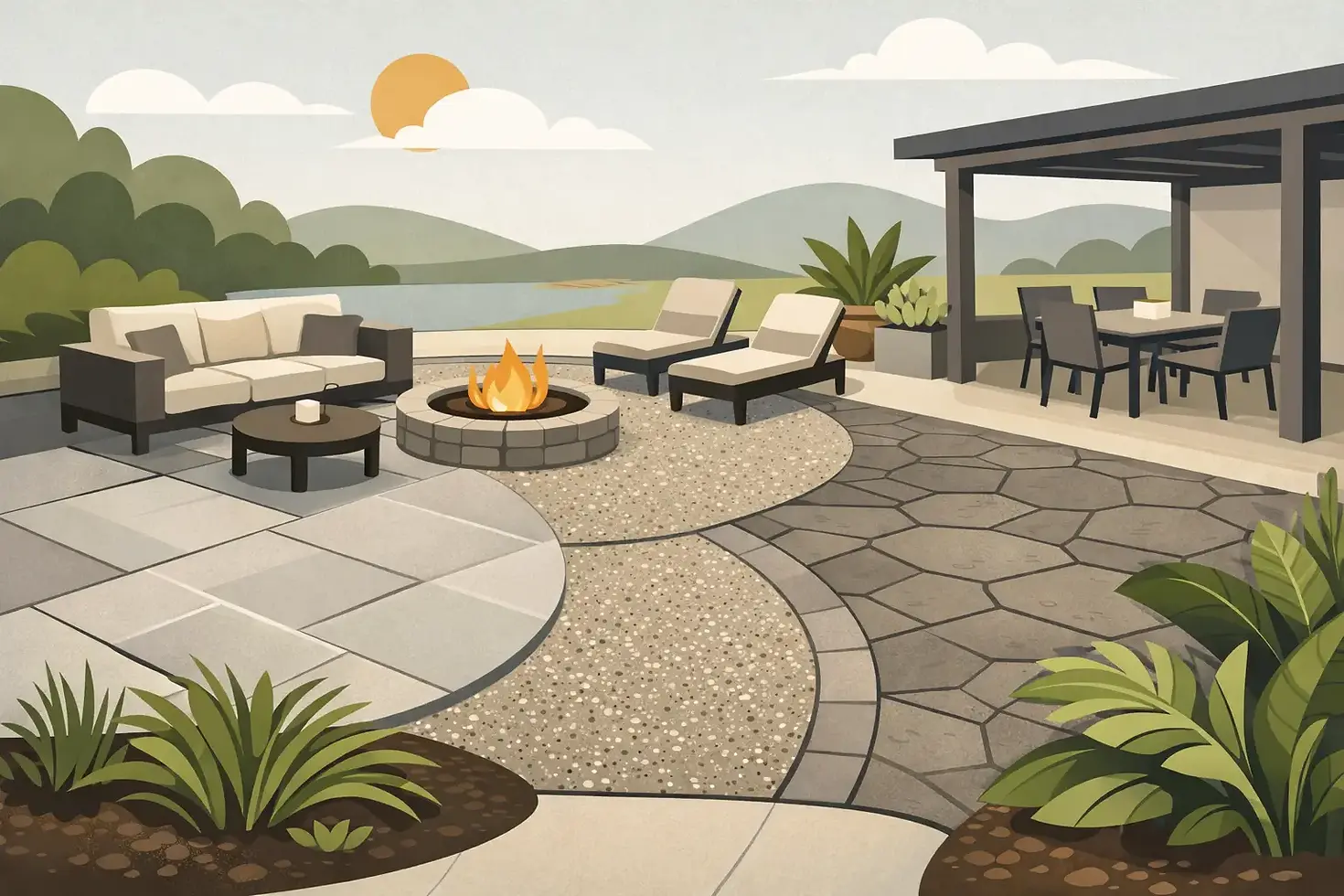
Decorative Concrete Patio Design Guide
A patio can either look like an afterthought or feel like part of the home. That difference usually comes down to design choices made before the concrete is poured or resurfaced. This decorative concrete patio design guide is built for Dallas-Fort Worth homeowners who want more than a plain slab. If you want a patio that looks refined, holds up in Texas weather, and adds real value to your outdoor space, the design phase matters just as much as the installation.
Homeowners often start with color or pattern, but the better approach is to begin with how the patio will actually be used. A space meant for quiet seating needs a different layout than one built around grilling, pool traffic, or weekend entertaining. Good decorative concrete does not just look attractive on day one. It should fit the way your family moves through the yard, how much sun the area gets, and how much maintenance you want to deal with over time.
How to use a decorative concrete patio design guide the right way
The biggest mistake we see is choosing a finish from a photo without thinking about scale, drainage, furniture placement, and surrounding architecture. A stamped pattern that looks great in a showroom sample can feel too busy across a large backyard. On the other hand, a simple broom or smooth finish may feel too plain if the patio is meant to anchor a high-end outdoor living area.
A smart design plan balances appearance, function, and durability. That means asking a few direct questions early. Is the patio brand new, or are you improving an existing slab? Do you want the concrete to mimic natural stone, tile, or wood, or do you want it to look like premium concrete on purpose? Are you building around a pool, a covered patio, outdoor kitchen, or fire feature? Those answers shape everything that follows.
Start with the patio's job, not just the pattern
Every successful patio has a clear purpose. For some homes, the patio is a transition space from the back door to the yard. For others, it is the main entertaining area and needs room for dining, lounge seating, and walking paths. In many Dallas-Fort Worth homes, the patio also has to connect cleanly with a pool deck, pergola, or covered extension.
When the layout is right, the decorative finish works better because it has a framework. Borders can define separate zones. Changes in texture can improve safety around wet areas. A larger stamped field can make an open entertaining space feel substantial, while a more restrained texture near the house can keep the overall look from feeling crowded.
This is also where size matters. Homeowners sometimes underestimate how much usable space furniture requires. A patio may look large on paper, then feel tight once chairs are pulled out and guests need room to move. It is far easier to adjust dimensions during planning than after the concrete is installed.
Choosing the right decorative concrete finish
The finish sets the tone for the entire project. Stamped concrete remains one of the most popular choices because it can create the look of stone, slate, brick, or wood while keeping the durability and efficiency of concrete. It works especially well for homeowners who want a custom appearance without the cost and movement issues that can come with individual pavers or natural stone pieces.
Resurfacing and stamped overlays are another strong option when the existing slab is structurally sound but visually dated. This route can give an older patio a completely different look without full replacement. That said, resurfacing is only as good as the slab underneath it. If the concrete has major structural cracks, settling, or drainage problems, covering it up is not the right fix.
Exposed aggregate creates a more textured, high-end surface with strong traction underfoot. That can be a smart fit for pool patios or areas that stay wet. The trade-off is aesthetic. It offers a different visual style than stamped concrete, and some homeowners prefer a cleaner, more tailored pattern for formal outdoor living spaces.
Color choices that work with Texas homes
Color is where many decorative patio projects either become cohesive or start to fight the house. The safest choice is usually not the lightest or darkest option on the chart. In North Texas, sun exposure is strong, dust is real, and outdoor surfaces need to work with brick, stone, stucco, and trim colors already on the property.
Earth tones, warm grays, muted tans, and natural stone-inspired blends tend to age well and stay flexible if you update furniture or landscaping later. Cooler grays can look sharp on more modern homes, but they need to coordinate with the home's exterior rather than stand apart from it. Richer color accents can be used in borders or scoring, though too much contrast may look trendy for a few years and dated after that.
There is also a practical side to color selection. Very light surfaces can reduce heat somewhat, which matters in the summer. Darker colors can add visual depth, but they may show dust faster and absorb more heat. The best choice is usually the one that gives you the look you want while staying realistic about maintenance and comfort.
Pattern, texture, and scale
Not every decorative pattern belongs on every patio. Large ashlar or stone-style stamp patterns often work well on broader patios because they feel proportional to the space. Tighter brick patterns can be a better fit for smaller areas, walkways, or border details. Wood plank concrete can look striking in the right setting, especially on contemporary or transitional homes, but it needs skilled installation to avoid looking artificial.
Texture matters just as much as the pattern itself. Around pools or in shaded areas where moisture lingers, slip resistance should be part of the decision. A smoother decorative surface may look sleek, but it can be less forgiving when wet. A more textured finish usually performs better, even if it creates a slightly more rugged appearance.
This is one of those areas where it depends on the priorities for the space. If the patio is mostly a covered entertaining area, visual refinement may lead the decision. If it is heavily exposed to water and foot traffic, performance should carry more weight.
Borders and layout details make the patio look custom
Many premium patio projects do not rely on one finish alone. They use borders, saw cuts, color breaks, or subtle pattern changes to give the surface a more finished and intentional look. A contrasting border can frame the patio and connect it visually to nearby walkways or a pool deck. Scoring can help break up large concrete areas so they feel more designed and less like a single wide slab.
These details work best when they support the architecture of the home. Straight, clean lines often fit modern or updated exteriors. More organic edges or stone-inspired borders may feel better with traditional homes or landscaped yards. The key is restraint. Good design looks planned, not crowded.
Drainage, shade, and long-term performance
A beautiful patio that holds water is a problem, not an upgrade. In the Dallas-Fort Worth area, heavy rain, heat, and shifting soil all affect outdoor concrete. Design has to account for slope, drainage flow, nearby structures, and how water moves away from the home and pool.
This is also why material quality and installation standards matter. Commercial-grade mixes, proper base preparation, and careful finishing all affect how the patio performs over time. Decorative concrete is not just about the top layer. If the foundation work is rushed, the surface will eventually show it.
Sealers are part of the long-term plan as well. They help protect color, resist wear, and support easier cleaning, but they are not permanent. Homeowners should expect periodic maintenance if they want the patio to keep its best appearance. That is not a drawback so much as a reality of owning a premium exterior surface.
Work with a contractor who plans before pouring
A decorative patio should not be sold like a commodity. The right contractor will talk through layout, traffic flow, finish options, drainage, and the condition of any existing concrete before recommending a solution. Honest quotes, clear scheduling, and realistic expectations are just as important as the final texture or color.
For homeowners investing in a better outdoor space, craftsmanship is what turns a design idea into a surface that actually lasts. At J. Rodriguez Concrete Contractors, that means helping homeowners choose an option that fits the property, the lifestyle, and the long-term value they expect from the project.
The best patio designs do not try to do everything at once. They solve the practical needs first, then add the right decorative details so the finished space feels natural, durable, and worth coming home to.


Comments