


7 Best Concrete Patio Finishes for DFW Homes
- Jorge Rodriguez
- Jul 16
- 6 min read
A plain gray patio can do its job, but it rarely becomes the part of the backyard where people want to gather. The best concrete patio finishes add texture, color, comfort, and a more intentional look without giving up the durability homeowners expect from concrete. For Dallas-Fort Worth homes, the right choice also needs to stand up to strong sun, sudden rain, pool traffic, and the occasional freeze.
The best finish is not always the most decorative one. It is the one that fits how you use the space, the condition of the existing slab, and the style of your home. A smooth modern patio, for example, calls for a different surface than a shaded pool deck or an outdoor kitchen built for weekend entertaining.
1. Stamped Concrete for High-End Style
Stamped concrete is one of the most popular patio upgrades because it gives homeowners the look of stone, slate, brick, wood planks, or tile while maintaining a continuous concrete surface. Patterns are pressed into fresh concrete or a properly prepared overlay, then enhanced with color and protective sealer.
This is a strong choice when you want the patio to feel like a finished outdoor room rather than a basic slab. A large stamped patio can create visual definition around a pergola, fire pit, seating area, or outdoor kitchen. It also gives you far more pattern and color options than standard broom-finished concrete.
There are trade-offs. Deeply textured stamped patterns can collect dust and require periodic resealing to keep their color and protection. Around a pool, the texture and sealer selection matter even more. A skilled installer will recommend a pattern with reliable traction and avoid an overly glossy finish that can become slick when wet.
2. Exposed Aggregate for Texture and Grip
Exposed aggregate reveals the natural stone within the concrete instead of covering it completely. After the surface is placed, the top layer of cement paste is carefully removed so the aggregate becomes visible. The result has a textured, durable appearance that works especially well on patios, walkways, and pool deck areas.
For homeowners who want a surface with natural variation but do not want the formal look of stamped concrete, exposed aggregate is a practical middle ground. It has built-in traction, handles outdoor use well, and pairs nicely with stone landscaping, brick homes, and natural-style backyards.
The aggregate mix makes a major difference. A well-chosen blend can look refined and intentional, while a poorly selected mix can look rough or inconsistent. This is not a finish where shortcuts disappear after the job is done. Proper placement, washing, curing, and sealing determine whether the surface looks premium and performs as it should.
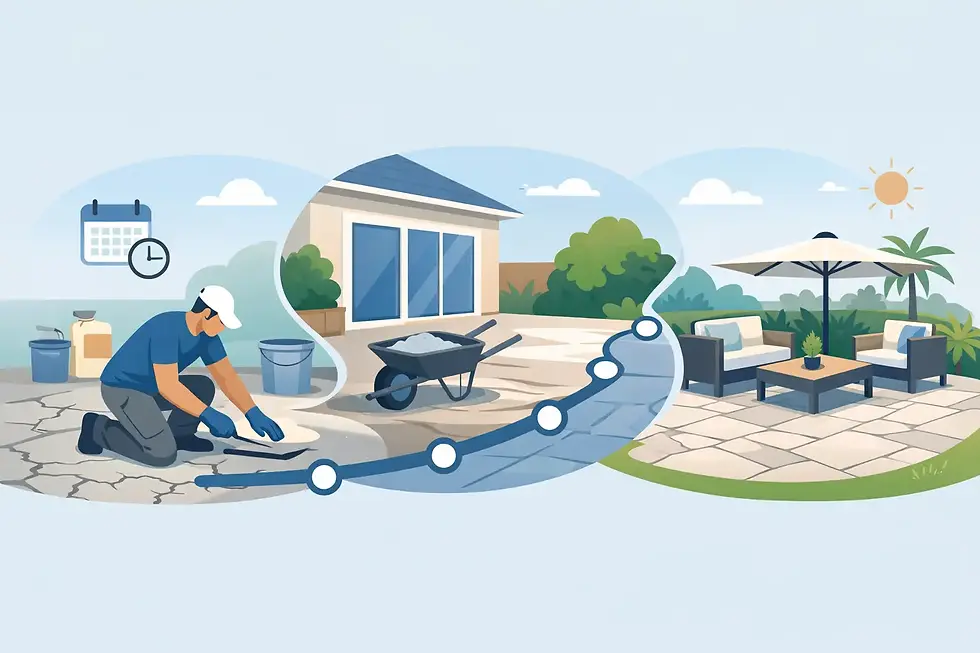
3. Concrete Resurfacing for Sound but Worn Patios
If your existing patio is structurally sound but stained, faded, lightly cracked, or outdated, resurfacing can provide a major visual upgrade without removing the entire slab. A resurfacing system applies a bonded cement-based layer over prepared concrete, creating a new finish that can be smooth, textured, stained, or stamped.
Resurfacing often makes sense for Dallas-Fort Worth homeowners who have an old patio with good bones. It can reduce demolition, shorten the project timeline, and open the door to decorative finishes that were not possible when the original slab was poured.
Preparation is the non-negotiable part. The existing concrete must be evaluated for movement, drainage issues, loose material, and significant cracking. A resurfacing product cannot solve an unstable base or a slab that is continuing to settle. Honest planning may mean repairing specific areas first, changing the drainage approach, or recommending replacement when resurfacing would not deliver a built-to-last result.
4. Stamped Overlays for Existing Concrete
Stamped overlays are a specific type of resurfacing system designed to create decorative texture over an existing slab. They are often used to turn an ordinary patio into a slate, flagstone, brick, or wood-plank-style surface without a full tear-out.
This option is especially appealing when the patio layout already works. Perhaps the slab is the right size for your furniture and connects well to the house, but the surface looks dated. A stamped overlay can give the area a more custom appearance while preserving the existing footprint.
Because overlays are thinner than a new concrete pour, installation quality is critical. Surface preparation, crack treatment, product selection, and the timing of stamping all affect the finished result. The contractor should also consider how the added thickness will meet doors, steps, drains, and adjacent hardscape. Those details are where a polished project separates itself from a cosmetic cover-up.
5. Salt Finish for a Relaxed Poolside Surface
A salt finish creates small, evenly distributed pits in fresh concrete. Rock salt is pressed into the surface and washed away after curing, leaving a subtle textured finish. It is less decorative than stamped concrete but more refined than a standard broom finish.
Salt-finished concrete is a smart option for pool decks and casual patios because it provides extra footing under bare feet and looks clean without competing with the pool, landscaping, or outdoor furniture. It can be colored for a warmer, more coordinated appearance, but it also works well in natural concrete tones.
The texture is modest, so it will not hide major slab imperfections. It is best suited to new concrete or surfaces that have been properly prepared for an overlay. If your priority is a cool, simple, low-profile pool deck, this finish deserves serious consideration.
6. Broom Finish for Clean, Practical Durability
A broom finish is created by pulling a specialized broom across fresh concrete, producing fine grooves for traction. It is the classic choice for a reason: it is dependable, cost-conscious, and well suited to patios that see rain, pets, kids, and regular foot traffic.
That does not mean it has to look basic. A broom-finished patio can be enhanced with integral color, saw-cut control joints, decorative borders, or a clean layout designed around the home. For contemporary properties, a lightly textured finish in a warm gray, sand, or charcoal tone can look crisp and purposeful.
This finish is often the right answer when performance and budget lead the decision. It does not replicate natural stone or create the visual impact of stamped concrete, but it delivers straightforward traction and long-term usability. For many homeowners, especially on larger patio expansions, that is exactly the value they need.
7. Smooth Trowel and Modern Matte Finishes
A smooth trowel finish creates a more streamlined, architectural look. It is popular for covered patios, modern outdoor living spaces, and areas where the goal is a clean surface with minimal visual texture. It can be paired with subtle color, microtopping systems, or a matte protective sealer for a more tailored appearance.
This finish requires careful planning outdoors. Smooth concrete can become slippery when wet, particularly near a pool or exposed to frequent rain. For that reason, it is usually better suited to covered entertainment areas or patios where a light traction additive can be included in the sealer.
A modern finish should still be built for real life. The goal is not a showroom surface that becomes difficult to maintain after one season. The right material and sealer can preserve the clean appearance while helping the patio handle daily use.
How to Choose Among the Best Concrete Patio Finishes
Start with the condition of your concrete. New construction gives you the broadest range of options. Existing concrete may be a good candidate for resurfacing or a stamped overlay, but only after a close inspection. Wide cracks, poor drainage, soil movement, and major elevation problems should be addressed before choosing a decorative finish.
Next, think about how the patio will be used. Pool areas need traction and heat-conscious material choices. Outdoor kitchens and dining patios benefit from finishes that are easy to clean and visually complement cabinets, stone, and lighting. A large entertaining space may need a decorative border or a pattern that breaks up the scale without looking busy.
Finally, consider maintenance honestly. Decorative concrete is durable, but it is not maintenance-free. Most sealed finishes benefit from routine cleaning and periodic resealing, especially in high-traffic or poolside areas. Choosing a quality system from the beginning protects your investment and keeps the surface looking consistent longer.
At J. Rodriguez Concrete Contractors, every patio project starts with the practical questions first: what condition is the slab in, how will the space be used, and which finish will still look right years from now? A well-planned concrete finish should make your backyard easier to enjoy, not give you another surface to worry about.


Comments